Haptic Shell
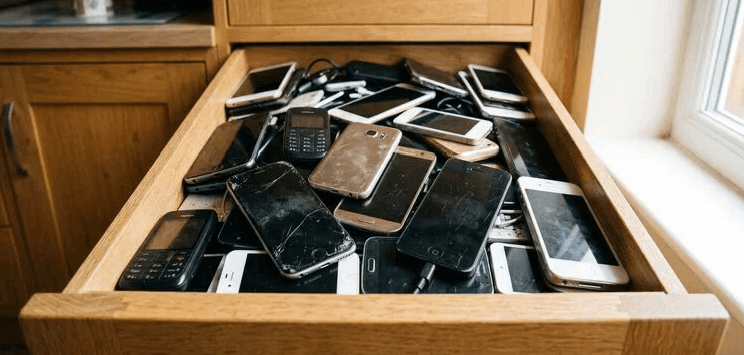
You know that old phone tucked away in your nightstand? Everyone has one. What if we could repurpose it and give it a second life?
You know that old phone tucked away in your nightstand? Everyone has one. What if we could repurpose it and give it a second life?
Scope: Industrial Design / UI/UX / Fabrication / Interactive Prototyping
Tools: Onshape, Blender, Figma, Additive Manufacturing
04.2026
Tools: Onshape, Blender, Figma, Additive Manufacturing
04.2026

01 / Overview
What
Haptic Shell is a modular system that transforms old smartphones into dedicated new devices using only 3D-printed components and a companion app. By pairing conductive filament with the native capacitive technology of smartphone screens, Haptic Shell introduces physical, tactile buttons that bridge the gap between digital interface and physical hardware.
Haptic Shell is a modular system that transforms old smartphones into dedicated new devices using only 3D-printed components and a companion app. By pairing conductive filament with the native capacitive technology of smartphone screens, Haptic Shell introduces physical, tactile buttons that bridge the gap between digital interface and physical hardware.
01 / Overview
Why
A recent survey from Decluttr.com found that the average home has around $264 of old and still-usable technology at home. It is estimated that Americans have $33 billion of unused technology sitting in their homes collecting dust.
A recent survey from Decluttr.com found that the average home has around $264 of old and still-usable technology at home. It is estimated that Americans have $33 billion of unused technology sitting in their homes collecting dust.
01 / Overview
How
By hacking the touchscreen. I used conductive filament to route the screen's touch sensitivity directly to physical, 3D-printed buttons. This brings back the tactile feel people miss, while eliminating the need for extra components like switches, bluetooth chips, or batteries. Ultimately reducing cost, simplifying manufacturing, and minimizing environmental impact. Above, I created a simple on screen button to test the 3D printed button mechanism.
By hacking the touchscreen. I used conductive filament to route the screen's touch sensitivity directly to physical, 3D-printed buttons. This brings back the tactile feel people miss, while eliminating the need for extra components like switches, bluetooth chips, or batteries. Ultimately reducing cost, simplifying manufacturing, and minimizing environmental impact. Above, I created a simple on screen button to test the 3D printed button mechanism.


02 / Prototype Validation
Button Mechanism Iteration
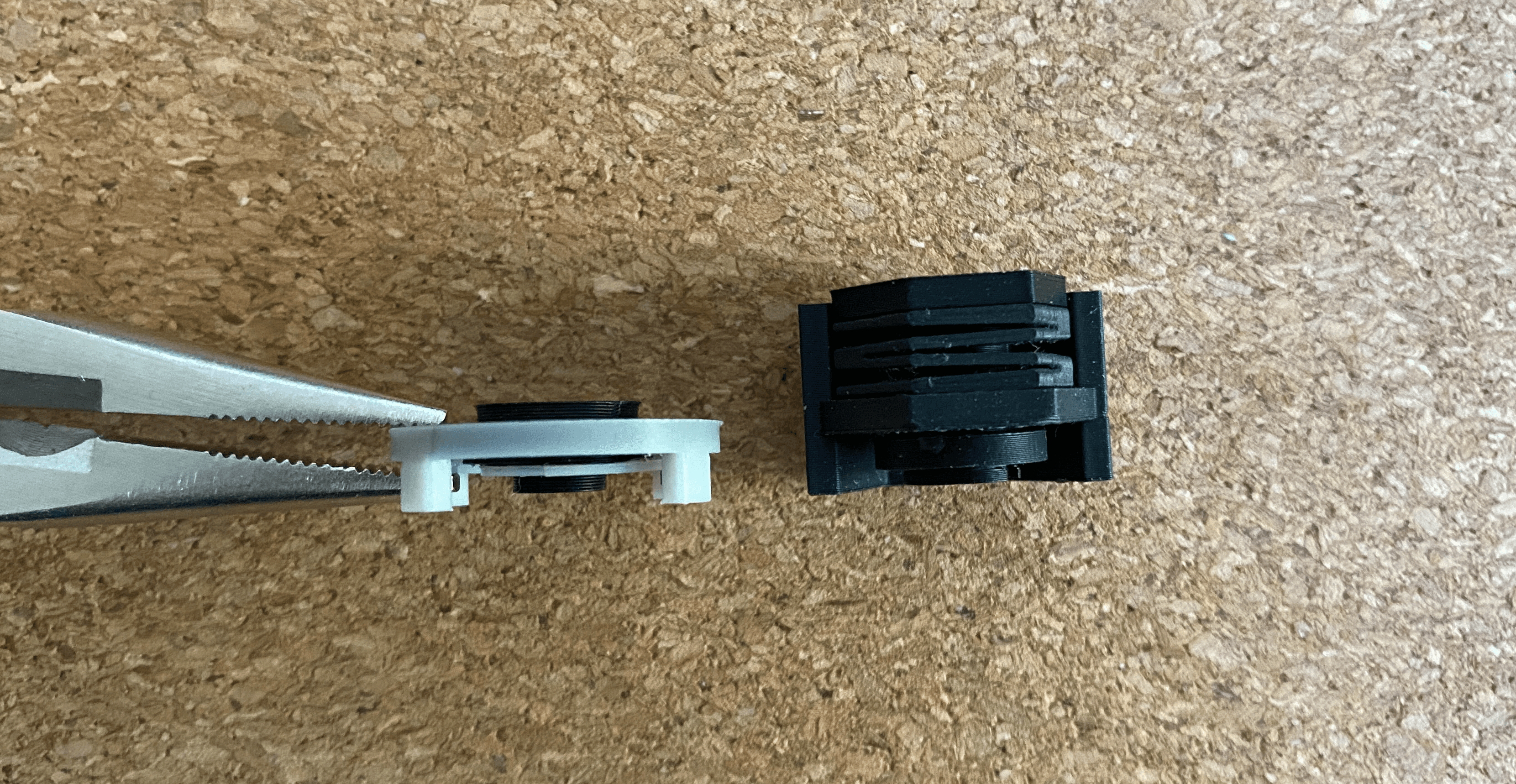
I stubbornly wanted to construct the enclosure solely from 3D-printed filament. Part of the challenge was figuring out how to replicate the spring deflection and tactile feedback of a mechanical switch using a completely monomaterial construction. After some exploration, I was able to shrink the mechanism significantly in both Z-height and overall footprint.
I stubbornly wanted to construct the enclosure solely from 3D-printed filament. Part of the challenge was figuring out how to replicate the spring deflection and tactile feedback of a mechanical switch using a completely monomaterial construction. After some exploration, I was able to shrink the mechanism significantly in both Z-height and overall footprint.
02 / Prototype Validation
Proof of Concept Build
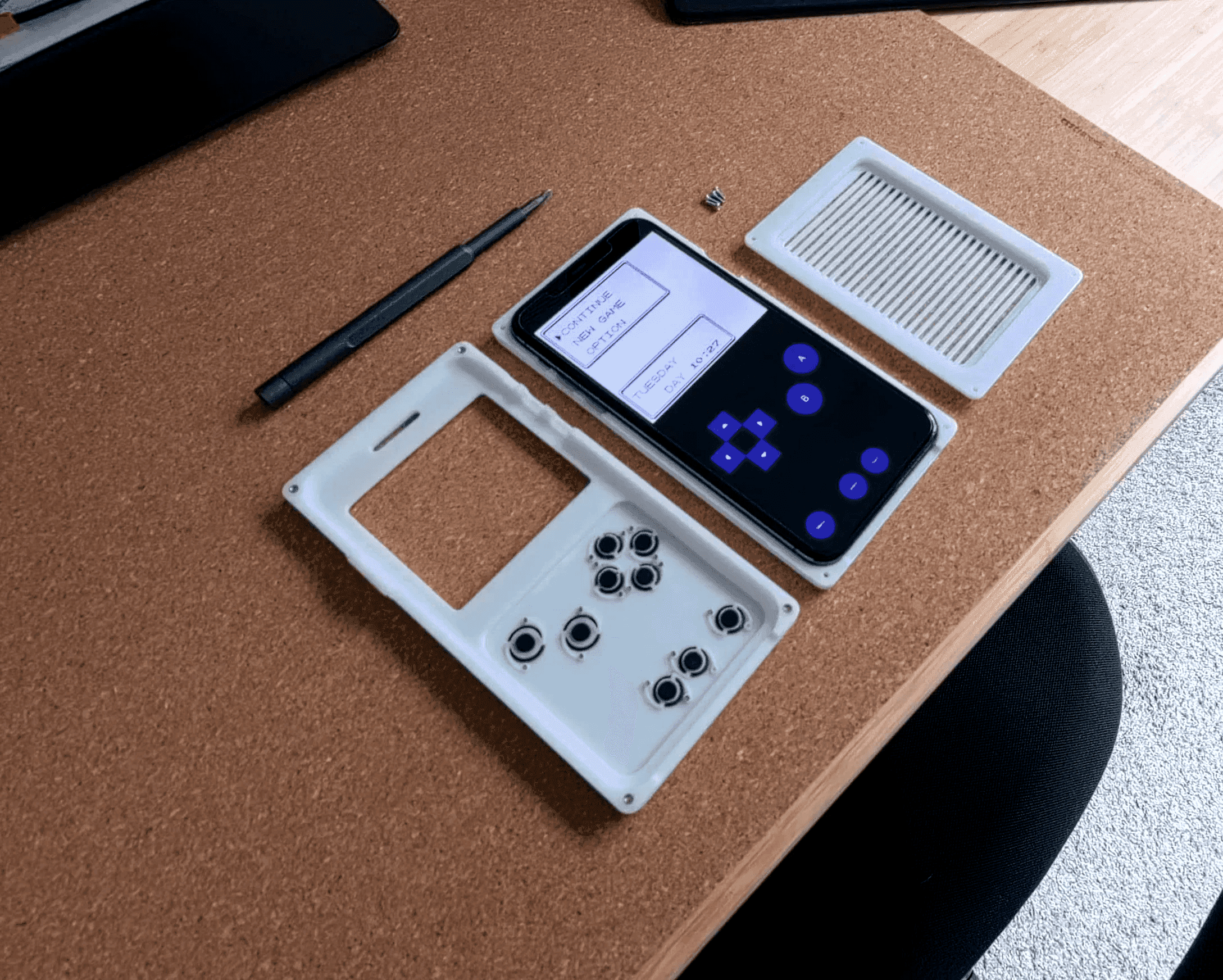
Before designing the look and feel, I needed to prove that a 3D printed button mechanism could reliably transfer electrical capacitance to the touchscreen. This build's purpose was to validate the physics, the materials used, and the mechanism design. Left is the buttons in action, right is the assembly and on screen interface I created.
Before designing the look and feel, I needed to prove that a 3D printed button mechanism could reliably transfer electrical capacitance to the touchscreen. This build's purpose was to validate the physics, the materials used, and the mechanism design. Left is the buttons in action, right is the assembly and on screen interface I created.

03 / Design Exploration
Design Ideation
After some ideation, it came down to two primary concepts, one where the face plate is replaceable or a highly repairable design with easy to swap out tiles. Survey data showed users found the tile option overwhelming and liked the simplified option over it.
After some ideation, it came down to two primary concepts, one where the face plate is replaceable or a highly repairable design with easy to swap out tiles. Survey data showed users found the tile option overwhelming and liked the simplified option over it.
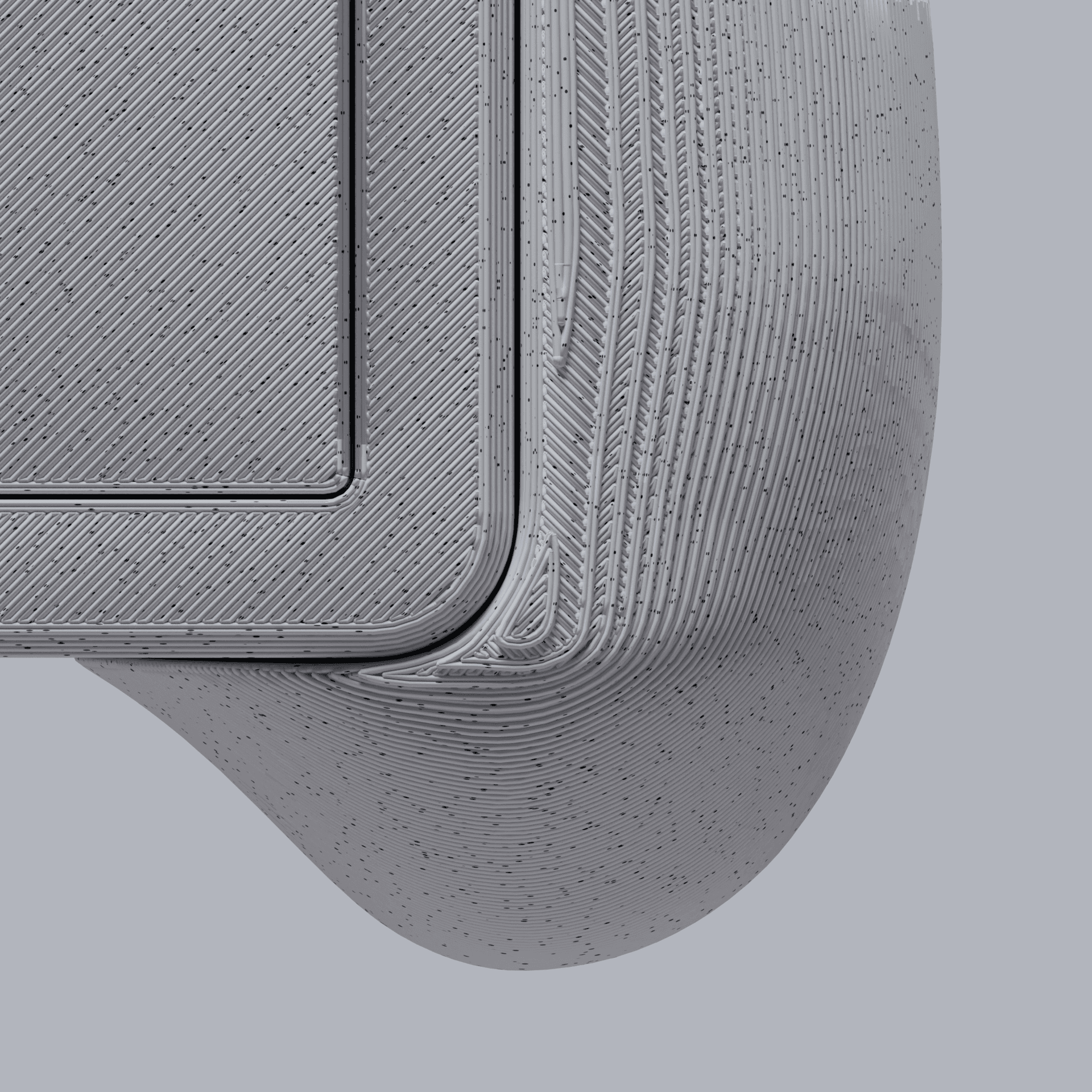


A handheld game console is just the beginning. What other digitized tools could be improved by bringing back physical controls?
A handheld game console is just the beginning. What other digitized tools could be improved by bringing back physical controls?


© nancy nguyen 2024
